Life after prison is hard. We offer a range of mentoring services and practical support programmes to ensure people who are returning to Dorset and Hampshire from prison get the best possible fresh start.
Through the Gate mentoring
The Footprints Project takes referrals from all prisons but actively visits clients in the following:
Prisons:
HMP Portland
HMP Guys Marsh
HMP Channings Wood
HMP Winchester
HMP Bronzefield (women)
HMP Eastwood Park (women)
HMP Send (women)
HMP Verne
HMP Dartmoor
HMP Exeter
Approved Premises:
Elizabeth Fry Approved Premises (women only), Reading
The Pines, Bournemouth
The Grange, Waterlooville
Dickson House, Fareham
Landguard Road, Southampton
Weston, Weymouth
Community Mentoring
The Footprints Project provides guidance and motivation to people who are already in the community but who may have spent time in prison, or be on probation. Our mentors have contact with people at least once a week, either meeting them face to face in the community or by telephone call, with additional contact between meetings if necessary, being a consistent, positive presence and helping people to get their lives back on track.
Mentoring for women
Gender-specific support is vital for the women we work with, many of whom have experienced domestic abuse and violence, sexual abuse, and exploitation. Volunteer mentors from The Footprints Project work in line with the Government’s 2018 Female Offender Strategy to deliver a mentoring scheme specifically for women who are returning to our area from women’s prisons HMP Bronzefield in Middlesex, HMP Send in Surrey, and HMP Eastwood Park in Gloucestershire. Specialist female team members from The Footprints Project visit women in prison when possible and and match them to female mentors who continue to support them in the community.
Ever Considered Volunteering?
Walking alongside someone can be the key to a meaningful change in behaviour.
Community art programme for women
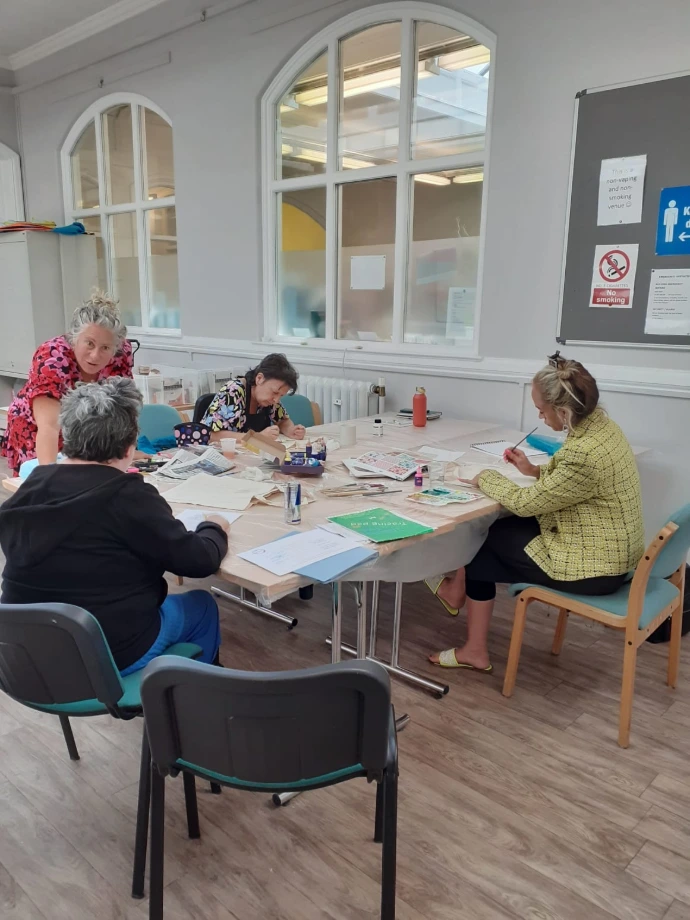
Time and space for creativity can make a big difference to mental health and emotional wellbeing for many of the women The Footprints Project supports. Our art programme involves small group sessions, run by an established Dorset artist, Samantha March, in partnership with our experienced staff. These regular sessions provide focus, friendship and a sense of self-belief for the women who attend. Some of our group also put on exhibitions and sell their work.
"I’m happy to have the opportunity to take part in the art sessions and find it helpful being guided by the art teacher and learning new techniques. It’s a nice place to go and do something different and I feel good when I’ve done something creative."
To refer a woman to the session please contact helen@footprintsproject.co.uk
Diversionary service for women
This service has been highly successful since its launch in 2019 and in 2020 was awarded a prestigious commendation from the Howard League for Penal Reform.